ISAAC GOMEZ

Isaac Gomez (she/they/he) is an award-winning Chicago-based playwright born and raised along the U.S./Mexico border in El Paso, Texas/Ciudad Juárez, Mexico. Despite growing up on the border, Gomez did not learn of the missing women of Juarez until their undergraduate education at UT Austin when a friend learned of the atrocity in a Feminist Chicana class. Gomez became obsessed with knowing more, and visited Juarez with his friend Blanca and Blanca’s mom, where they met a woman named Yolanda whose daughter Brenda is still missing. These real people would become the namesakes of the title characters in La Ruta. To this, Gomez said, “The characters are real. The circumstances are real. Many of the characters in the play now are dead. What is fictional merely is the circumstances of their reimagining. I wanted to write about what it is like to live in the wake of unspeakable loss.”
She is currently under commission from South Coast Repertory, Denver Center for the Performing Arts, and Steep Theatre. Her plays have been supported by Steppenwolf Theater Company, Denver Center, Primary Stages, Oregon Shakespeare Festival, Goodman Theatre, and others. He is the recipient of the 2018 Dramatists Guild Lanford Wilson Award, the 2017 Jeffrey Melnick New Playwright Award at Primary Stages, an inaugural 3Arts “Make A Wave” grantee, and holds various affiliations with artistic organizations nationally and locally. He is a Professional Lecturer at The Theatre School at DePaul University, and is represented by The Gersh Agency and Circle of Confusion.
More on Isaac Gomez and La Ruta…
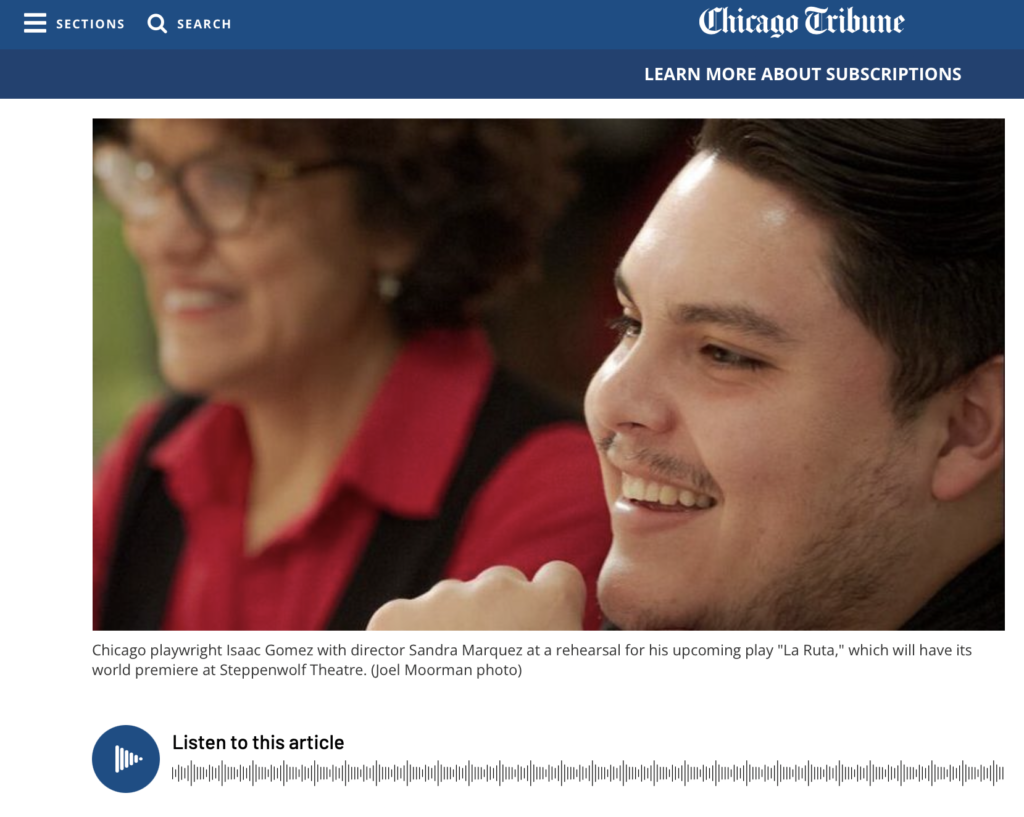
“La Ruta is a play about a group of women in ciudad Juarez who are living in the wake of unspeakable loss. And it’s a play about sisters, it’s a play about mothers, a play about best friends… the circumstances around the missing and murdered women of Juarez are the backdrop of what is actually is a play that is an interpersonal journey of healing, of growth, of resilience… and that’s empowerment. And so for me, as a queer mexican man born and raised on the US/Mexican border, I owe my entire existence to Mexican women. I would be nothing without them. So this play is my love letter to them.”

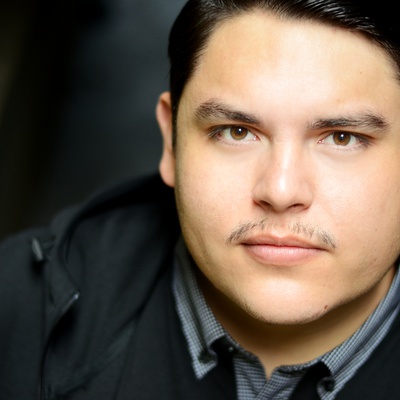
“Among his interviewees, he said, was a mother who had lost her daughter. “She kept saying to me, ‘What’s this for? A play?,’” Gomez said, his eyes flashing. “’Can you pass on a message for me to anyone who might be watching this? Anyone who could know where my daughter might be.’”
